IMPACT VEST BUYING GUIDE FOR
KITESURFING, WING FOILING &
WAKEBOARDING
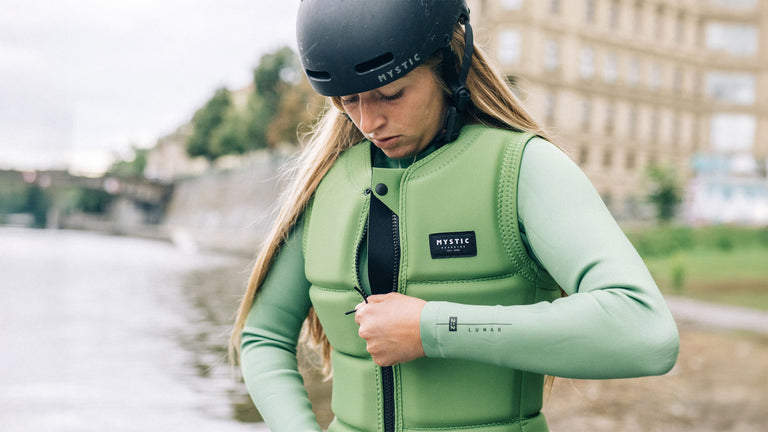
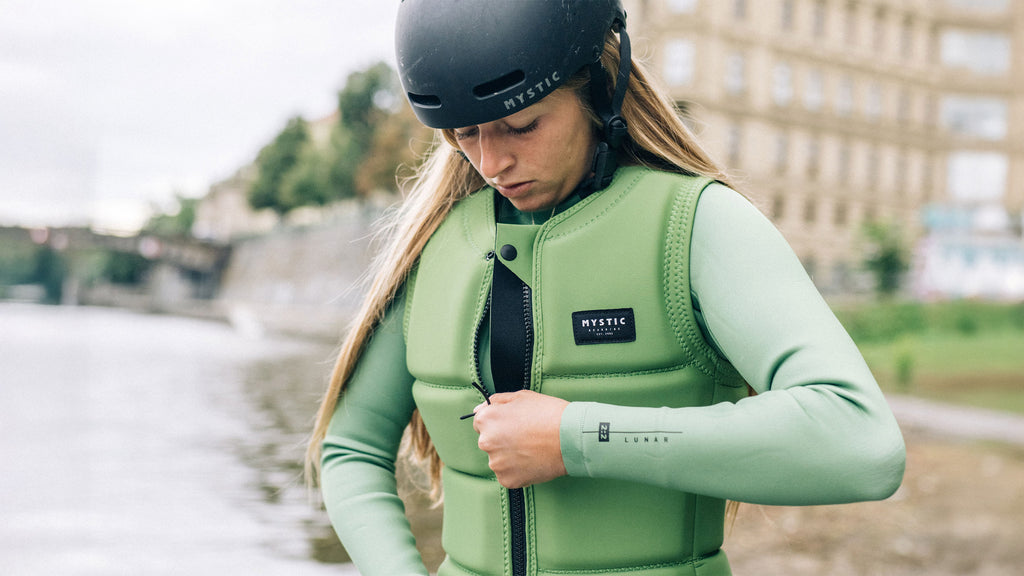
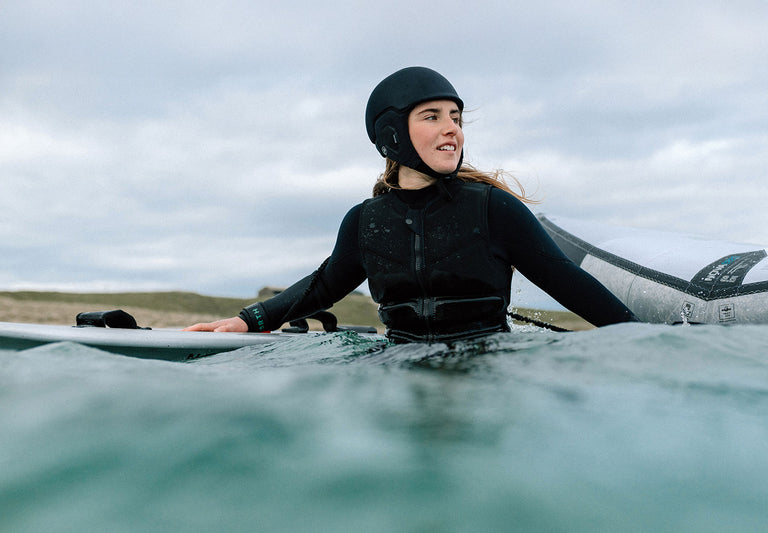
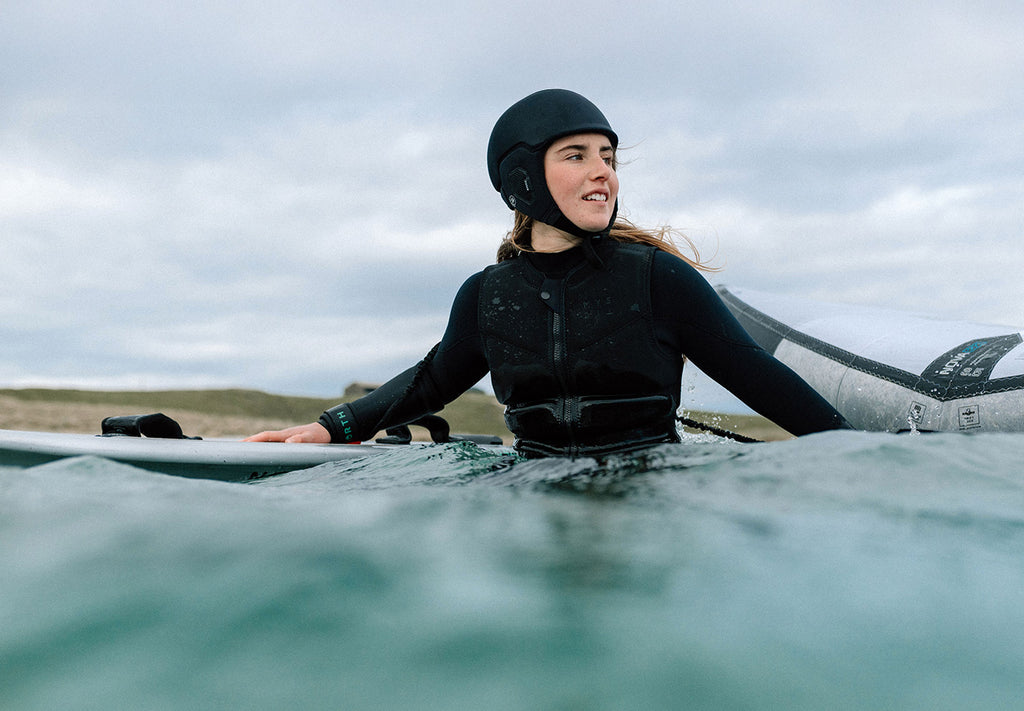
An impact vest does one simple job - it takes the sting out of hitting the water at speed. Whether you’re landing a kiteloop gone wrong, catching a rail on the cable park, or getting bucked off your wing foil, the right vest absorbs the hit so your ribs don’t have to.
But not all impact vests are built for the same sport or the same rider. A vest that works perfectly for wakeboarding at a cable park might be completely wrong for kitesurfing, where harness compatibility and wind chill change the equation. And if you’re wing foiling, you’re dealing with a whole different set of impact risks - hydrofoil strikes to the torso are no joke.
This guide breaks down how to choose the right impact vest for your sport, your body, and your riding style.We’veincluded input from professional athletes who rely on their vests in real conditions, plus practical advice on sizing, CE ratings, and what to look for whenyou’recomparing options. If you want broader safety guidance, check outour
Impact Vest vs Life Jacket - Understanding the Difference
This guide breaks down how to choose the right impact vest for your sport, your body, and your riding style. We’ve included input from professional athletes who rely on their vests in real conditions, plus practical advice on sizing, CE ratings, and what to look for when you’re comparing options. If you want broader safety guidance, check out our essential guide to water sports protection and safety.
This is one of the most common questions we hear, and the answer matters because getting it wrong can have real consequences.
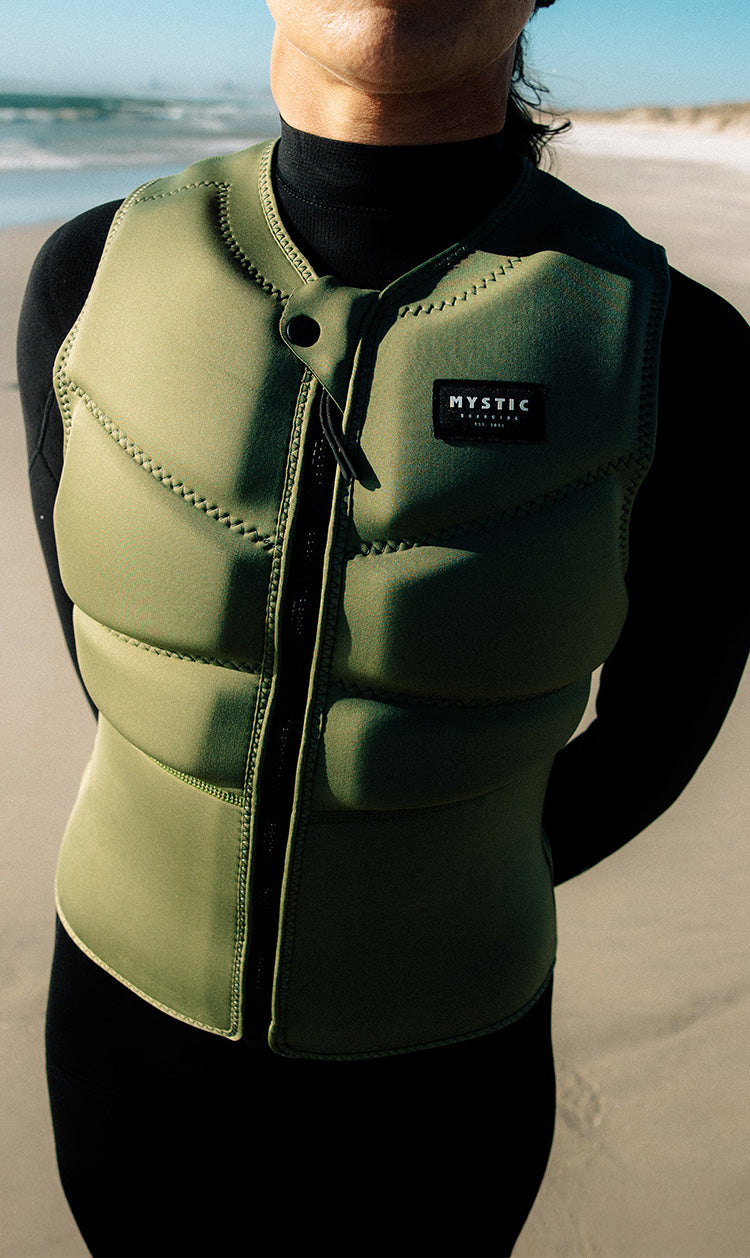
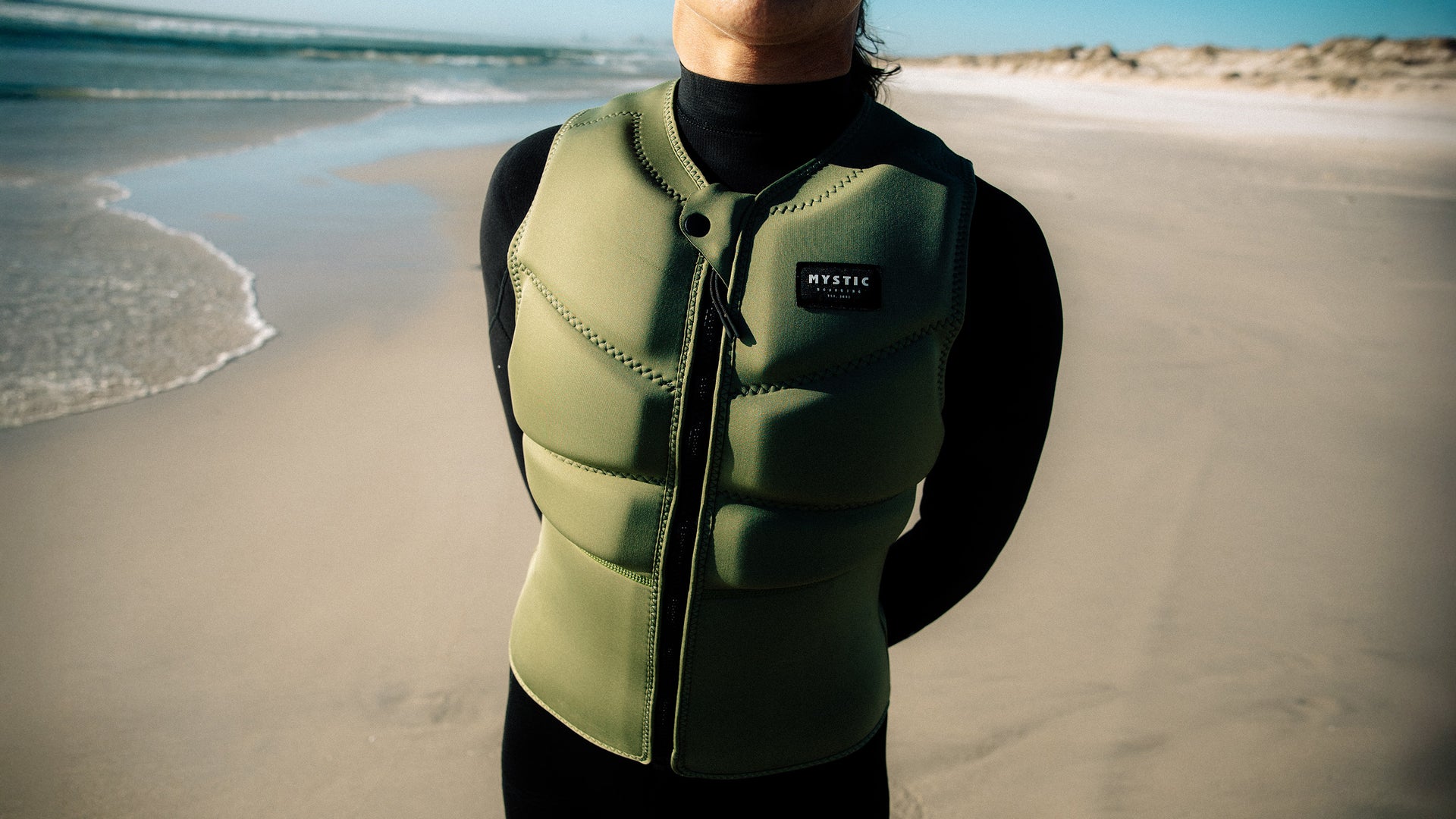
An impact vest is designed to protect your body from physical impacts - crashes, hard landings, equipment strikes. It uses segmented foam padding to absorb force across your chest, ribs, and back. Most impact vests provide some buoyancy, but they are not designed to keep you afloat if you’re unconscious.
A life jacket (or personal flotation device) is designed to keep you floating, face-up, even if you can’t swim. Life jackets are rated at 100N or 150N of buoyancy and are legally required for certain activities and waterways.
A buoyancy aid sits somewhere in between - typically rated at 50N, it helps you stay afloat but assumes you’re a competent swimmer. Some impact vests carry a 50N buoyancy rating, which puts them in buoyancy aid territory, but the primary function is still impact protection.
When do you need which?
For kitesurfing, wakeboarding, and wing foiling, an impact vest is usually the right choice. You’re an active, competent swimmer in a sport where crash protection matters more than passive flotation. If you’re heading offshore, sailing, or riding in conditions where you might not be able to help yourself, a life jacket or buoyancy aid makes more sense.
| FEATURE | IMPACT VEST | BUOYANCY AID | LIFE JACKET |
|---|---|---|---|
| PRIMARY PURPOSE | Absorb crash impacts | Help you float | Keep you floating face-up |
| BUOYANCY RATING | Varies (some50N) | 50N | 100N-150N+ |
| FACE-UP? | No | No | Yes |
| RESTRICTION | Minimal | Low | Moderate to High |
| BEST FOR | Kite / wake / wing foil | Dinghy sailing / SUP | Offshore sailing / jet ski |
| HARNESS COMPATIBLE | Sport-specififc designs | Rarely | No |
How Impact Vests Work - Construction, Materials & CE Ratings
For kitesurfing, wakeboarding, and wing foiling, an impact vest is usually the right choice.You’rean active, competent swimmer in a sport where crash protection matters more than passive flotation. Ifyou’reheading offshore, sailing, or riding in conditions where you might not be able to help yourself, a life jacket or buoyancy aid makes more sense.
Foam Types and Density
Impact vests use closed-cell foam panels to absorb and distribute force. The foam densitydetermineshow much energy the vest can handle before the impact reaches your body. Higher-density foam provides better protection but can feel stiffer. Our vests use multi-density foam - firmer panels over the ribs and spine where protection mattersmost,softer panels around the shoulders and sides where mobility takes priority.
Panel Construction
The way foam panels are cut and stitched affects both protection and comfort. Segmented panel designs allow the vest to flex with your body whilemaintainingcoverage. Larger panels offer more protection per zone but less flexibility. Smaller, articulated panels move better but need precise alignment to avoid gaps.
CE Certification
CE certification tells you that the vest has been independently tested to European safety standards. For impact vests, the relevant standard is EN ISO 12402-5 (Level 50 buoyancy aids with impact protection). A CE-rated vest has been tested for both buoyancy and impact absorption, which gives you a verified baseline of protection rather than just a manufacturer’s claim.
Not all impact vests carry CE certification. Some are designed purely for impact protection without any buoyancy rating. Both have their place - but if buoyancy matters to you, look for the CE 50N marking.
Coverage Areas
A well-designed impact vest protects three critical zones: the front of the chest and ribs, the sides of the torso, and the spine. Some vests extend coverage to the kidneys and lower back, which is particularly valuable for wakeboarding where backward falls onto the water surface are common.
"Nobody likes crashing, but it's part of learning new tricks and pushing bigger jumps. I've had a few heavy impacts over the years, and wearing an impact vest makes a real difference when things don't go as planned. It gives me a bit more confidence to keep progressing."
- Jett Bradshaw

Choosing an Impact Vest for Kitesurfing & Wing Foiling
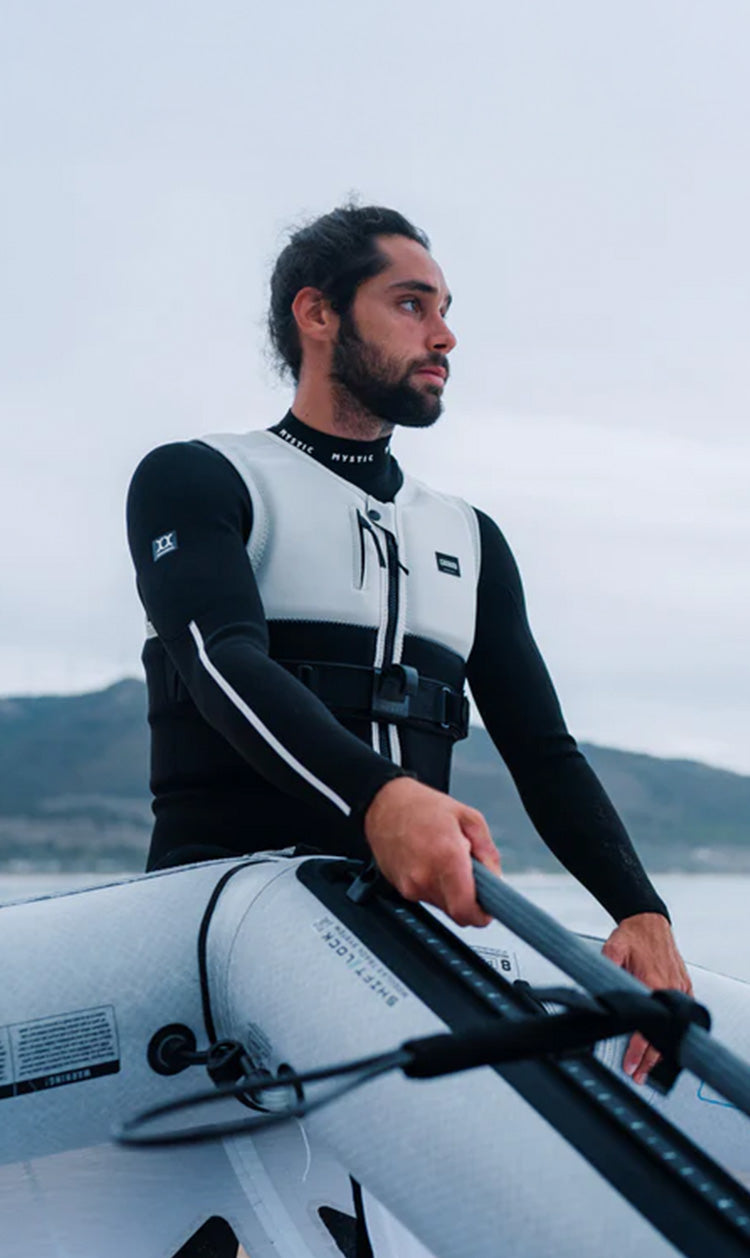
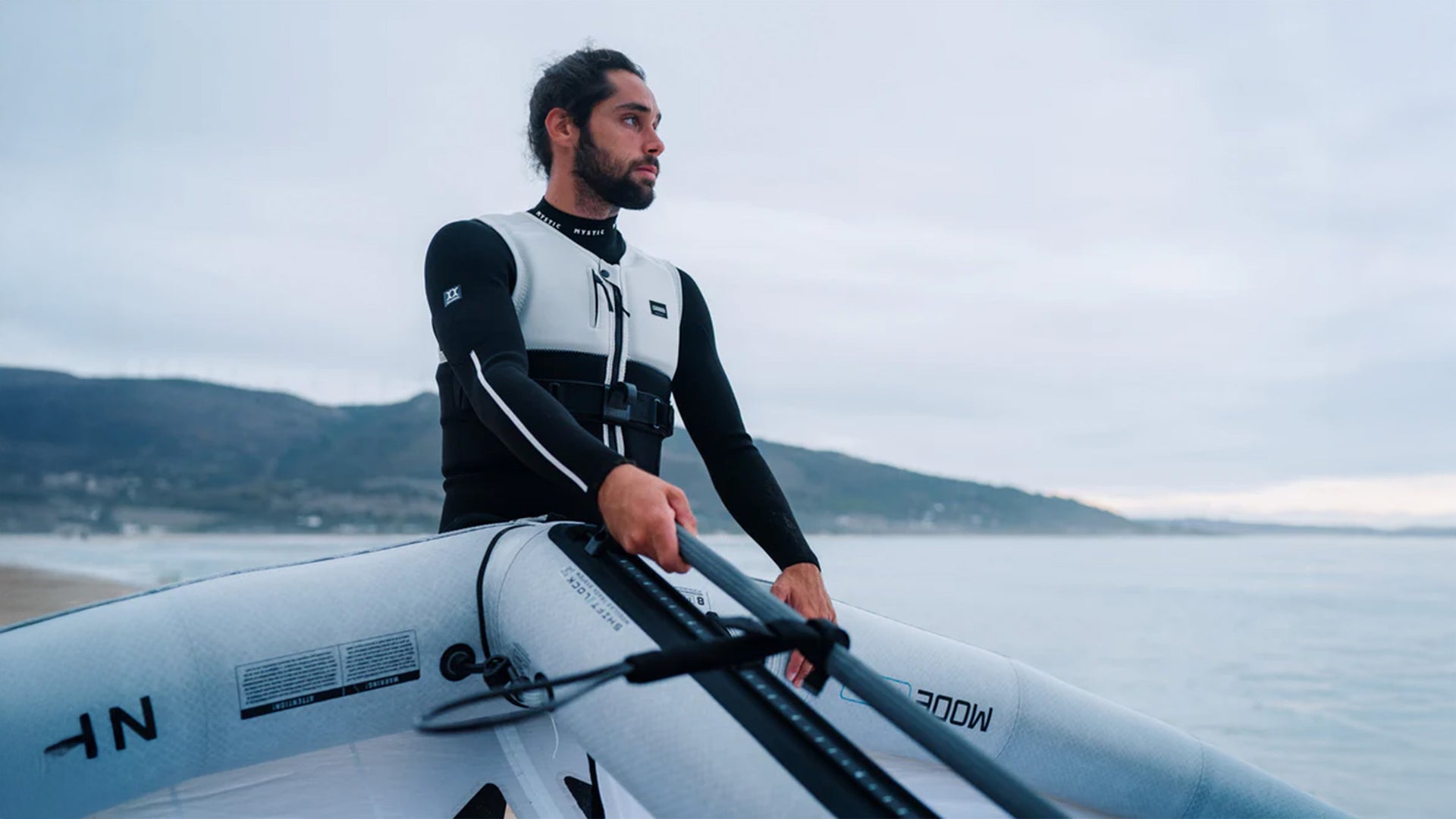
Kite and wing foil impact vests need to solve a problem that wake vestsdon’t - theyhave towork with a harness. This single requirement changes the entire design approach.
Harness Compatibility
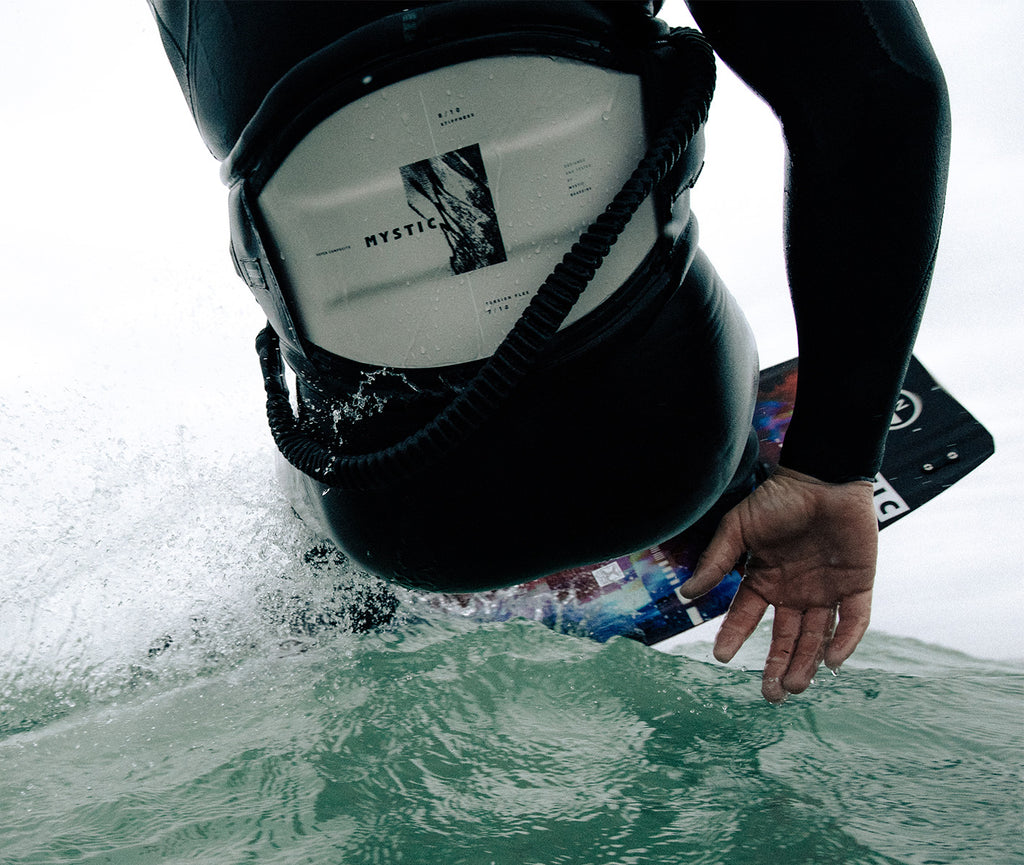
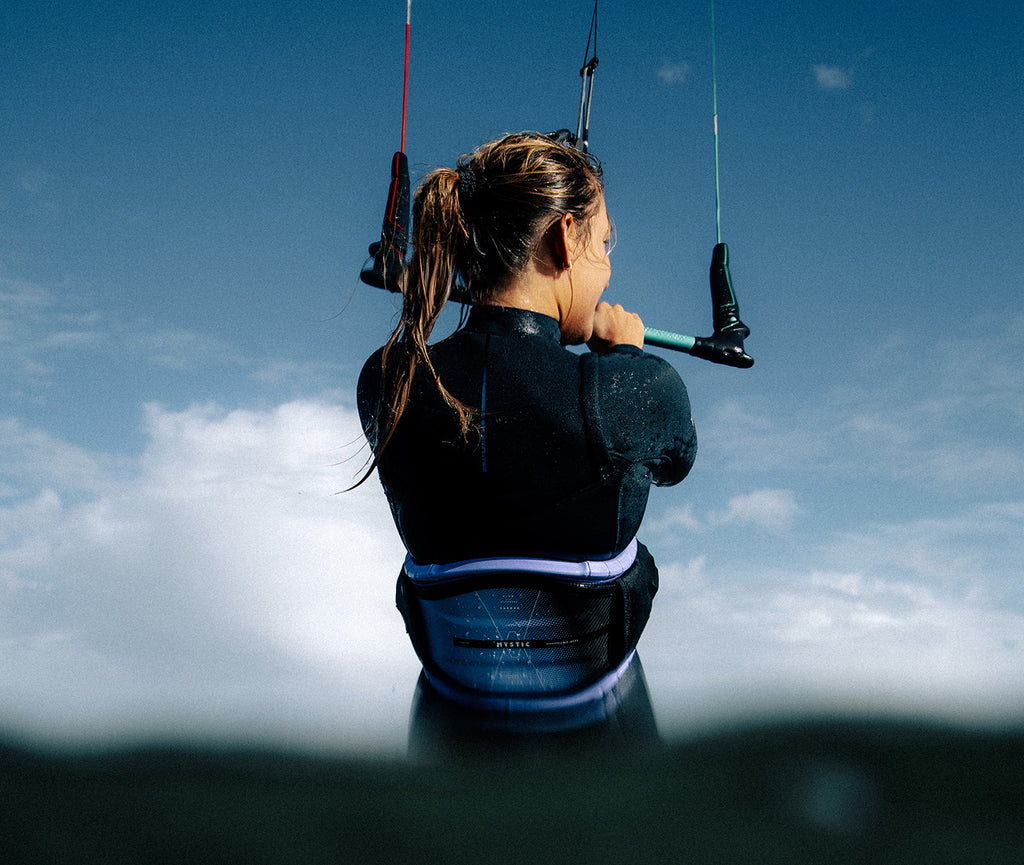
When you’re kitesurfing or wing foiling, your harness sits around your waist or hips and takes the kite’s pull. The impact vest needs to fit underneath the harness without bunching, riding up, or creating pressure points. Kite-specific vests are cut shorter at the front and sides with a lower profile around the waist so the harness hook and spreader bar sit cleanly against your body.
A standard wake vest worn under a kite harness will bunch at the waist, restrict the harness from sitting properly, and ride up every time you get pulled forward. It’s uncomfortable at best and potentially dangerous at worst - you need that harness to stay exactly where you set it.
We design our kite impact vests specifically around harness integration. The foam panel layout, the cut length, and the closure system are all shaped to work as a layer within the harness setup, not against it.
Wind Chill and Layering
Kitesurfing and wing foiling expose you to sustained wind chill that wakeboarding at a cable park simplydoesn’t. Your impact vest becomes part of your thermal layering system - worn over your wetsuit, it adds an extra barrier against wind and water flushing. Inwinter conditions, thatadditionallayer makes a noticeable difference to how long you can stay on the water.
Foil-Specific Impact Risks
- Wing foiling and kite foiling introduce a specific injury risk that other board sports don’t share - the hydrofoil itself. A high-speed wipeout with a foil underneath you means your torso can contact the mast, wings, or fuselage. Impact vests designed for foiling tend to have slightly higher foam density and more comprehensive back coverage to account for these risks.
Check out our foil-specific impact vests here.
What to Look for
- Low-profile waist design that sits cleanly under your harness
- Front-zip or side-zip entry for easy on/off with a wetsuit
- Segmented panels around the shoulders for bar/wing handle movement
- Adequate back coverage if you’re foiling
- Neoprene shell for added wind and water protection
"I spend a lot of time on the water, so I need gear that feels comfortable from the moment I put it on. The Star impact vest fits naturally under my harness, doesn't restrict my movement, and gives me the confidence to focus on riding"
- Nathalie Lambrecht
Choosing an Impact Vest for Wakeboarding
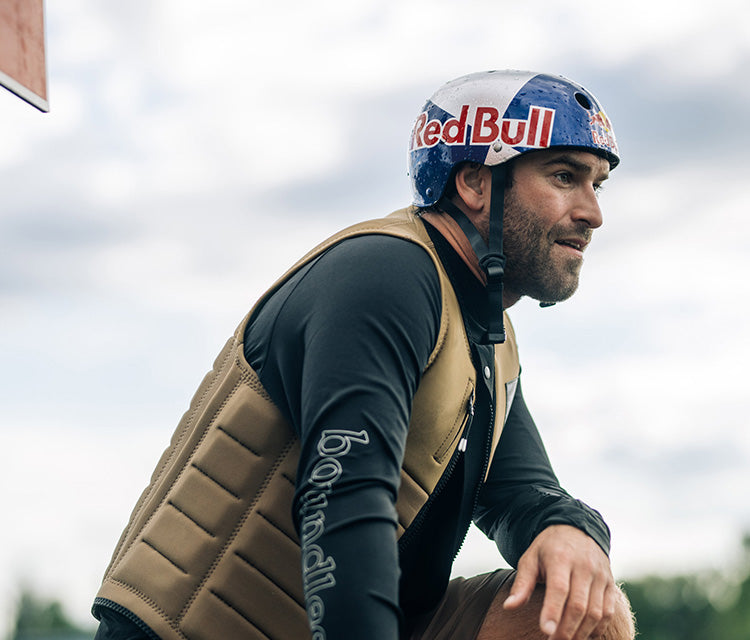
Wakeboarding places different demands on an impact vest compared to kite sports. There’s no harness to work around, but the intensity and type of impacts are different - particularly at cable parks where obstacles are part of the terrain.
Cable Park and Boat Riding
Cable park riding means rails, kickers, and hard features that you will, at some point, fall onto or land near. Anyone who’s caught an edge on a rail at hip height knows the difference between hitting water and hitting a steel tube. A wake impact vest needs thicker, firmer foam panels - particularly across the ribs and front - because you’re hitting structured surfaces, not just flat water.
Boat riding behind a tow rope generates higher speeds, which means harder water impacts. The falls are different in character - more full-body slaps and tumbles at 30+ km/h rather than the localised hits of a cable park. Both scenarios benefit from solid vest protection, but cable park riders especially should prioritise coverage and foam density.
Range of Motion for Handle Passes
Wakeboarding requires a wide range of overhead and rotational arm movement. Handle passes, grabs, and inverts all demand that your vest doesn’t catch or restrict your shoulders. Wake-specific vests use a wider armhole cut and more articulated shoulder panels than kite vests.
Ease of Entry from the Water
Unlike kitesurfing where you kit up on the beach, wakeboarders often need to put on or adjust their vest while treading water. Side-zip and front-zip designs make this easier. Pull-over vests without a zip are slimmer but harder to get into when wet — worth considering if you ride at a cable park where you’re getting in and out of the water frequently.
Browse our wake impact vest collection here.
What to Look For
- Higher foam density across the front and ribs for obstacle impacts
- Wide armhole and shoulder panels for unrestricted overhead movement
- Front-zip or side-zip entry for water-level gear changes
- Slim, low-profile fit that doesn’t catch on rails
- Quick-dry materials for back-to-back runs
Women's Impact Vest - Fit, Design & Top Picks
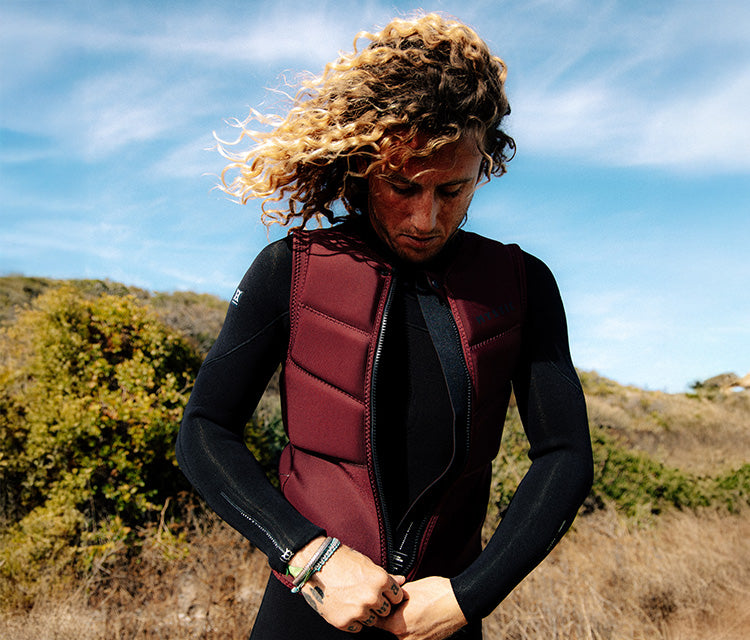
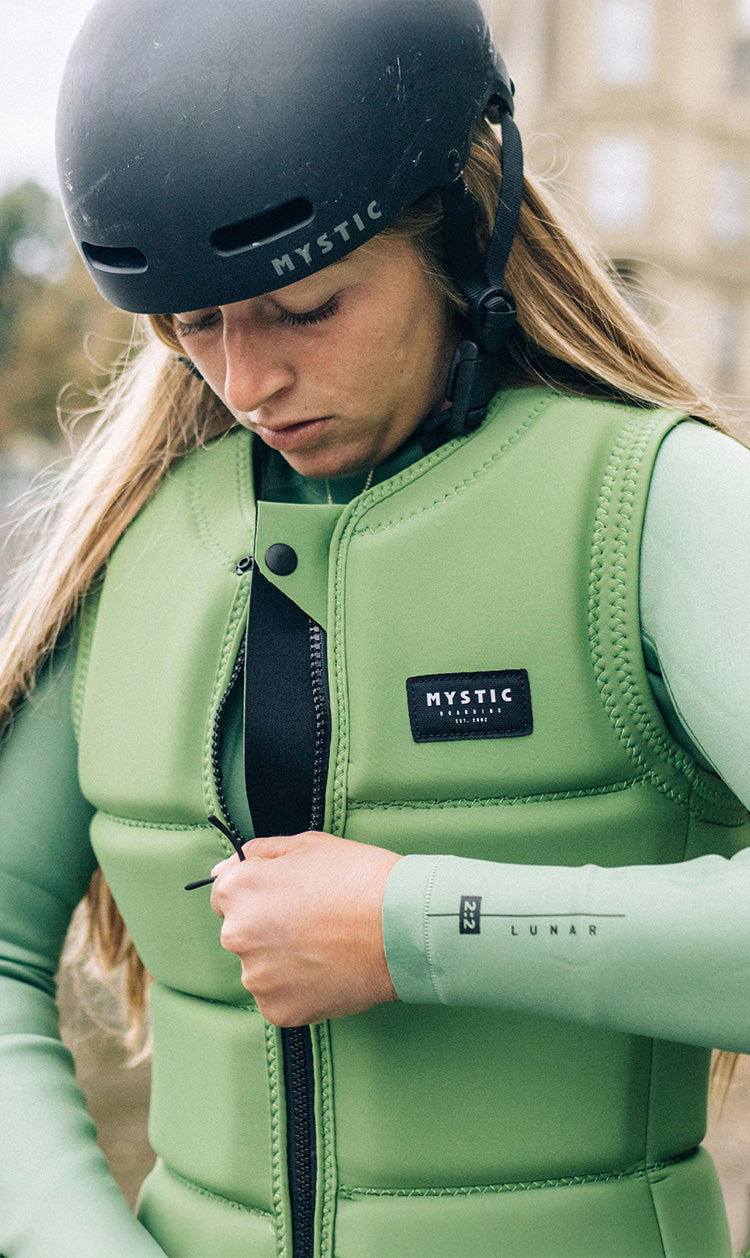
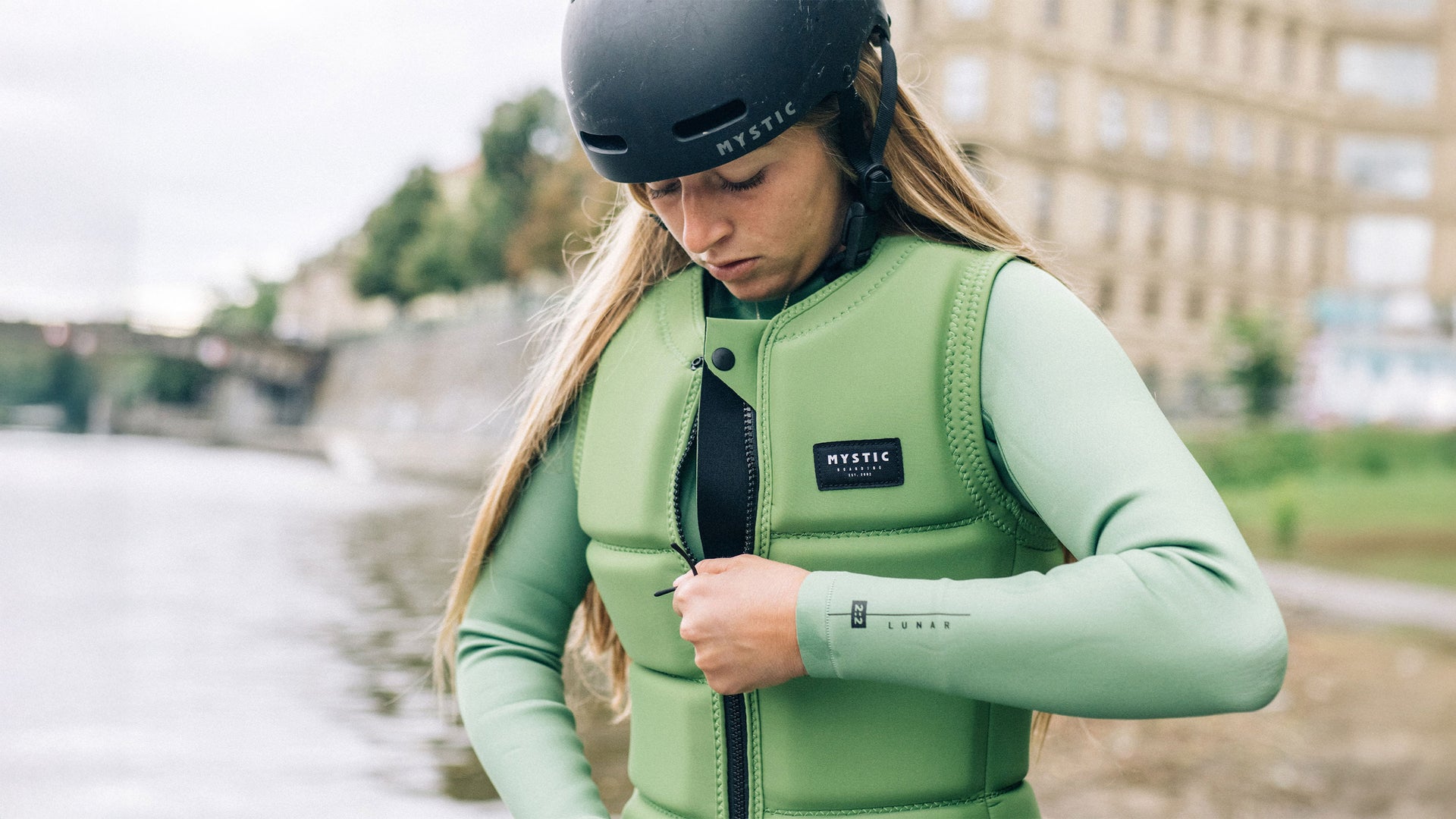
A women’s impact vest isn’t just a smaller men’s vest in a different colour. The fit, panel shaping, and cut need to account for different body proportions to provide proper protection and genuine comfort.
Why Women’s-Specific Fit Matters
The most important difference is torso length and chest panel shaping. A men’s vest worn by a female rider will typically sit too long in the torso, bunch at the waist under a harness, and leave gaps around the chest where the foam panels don’t make proper contact with the body. Those gaps reduce the vest’s ability to absorb impacts - the foam needs to be flush against you to do its job.
Women’s-specific vests reshape the panel layout to follow female anatomy: shorter torso length, contoured chest panels, and adjusted side profiles. The result is a vest that sits properly, protects effectively, and feels comfortable enough that you actually want to wear it every session.
Sizing Considerations
Women’s impact vests typically run in their own size range (XS through L or 6 through 14, depending on the brand). Don’t try to size down in a men’s range as a workaround - the proportions are different, not just the measurements. Check the sizing chart for chest, waist, and torso length measurements rather than guessing based on your wetsuit size, because fit varies between brands and even between vest models.
Explore our women’s impact vest collection here.
What to Look For
- Women’s-specific panel shaping (not just resized men’s patterns)
- Correct torso length that doesn’t ride up or bunch under a harness
- Same foam density and CE rating as the men’s equivalent - never compromised
- Functional colour and design options beyond just “shrink it and pink it”
Impact Vest Sizing & Fit Guide
Fit is everything with an impact vest. A vest that shifts during a crash isn’t doing its job - the foam needs to be exactly where the impact lands. Here’s how to get the sizing right.
How to Measure
You need two measurements: chest circumference (measured at the widest point around your chest, under your arms) and waist circumference (measured at your natural waistline). If you’ll be wearing the vest over a wetsuit, take your measurements while wearing the wetsuit - neoprene adds 1–3 cm depending on thickness.
What a Correct Fit Looks Like
A properly fitted impact vest should feel snug when dry. It will soften slightly when wet as the neoprene relaxes. The foam panels should sit flat against your torso with no gaps. You should be able to raise your arms overhead without the vest riding up more than 2–3 cm. If someone can pull the vest away from your body by more than a fist width, it’s too loose.
Common Sizing Mistakes
The most common mistake is buying too large. It’s tempting to size up for comfort, but a loose vest moves independently from your body during a crash - which means the foam isn’t in position when you need it. We see this all the time, especially with riders who try on a vest in a warm shop without a wetsuit. The second most common mistake is the opposite: not accounting for wetsuit thickness. A vest that fits perfectly over a rashguard will be too tight over a 5/4mm winter wetsuit.
Mystic Impact Vest Size Guide
| SIZE | CHEST | WAIST (CM) |
|---|---|---|
| XS | 84-88 | 70-74 |
| S | 88-92 | 74-78 |
| M | 92-98 | 78-84 |
| L | 98-104 | 84-90 |
| XL | 104-110 | 90-96 |
Care, Maintenance & Lifespan
An impact vest is a piece of safety equipment, and like all safety gear, it has a finite working life. Proper care extends that life and keeps the protection level consistent.
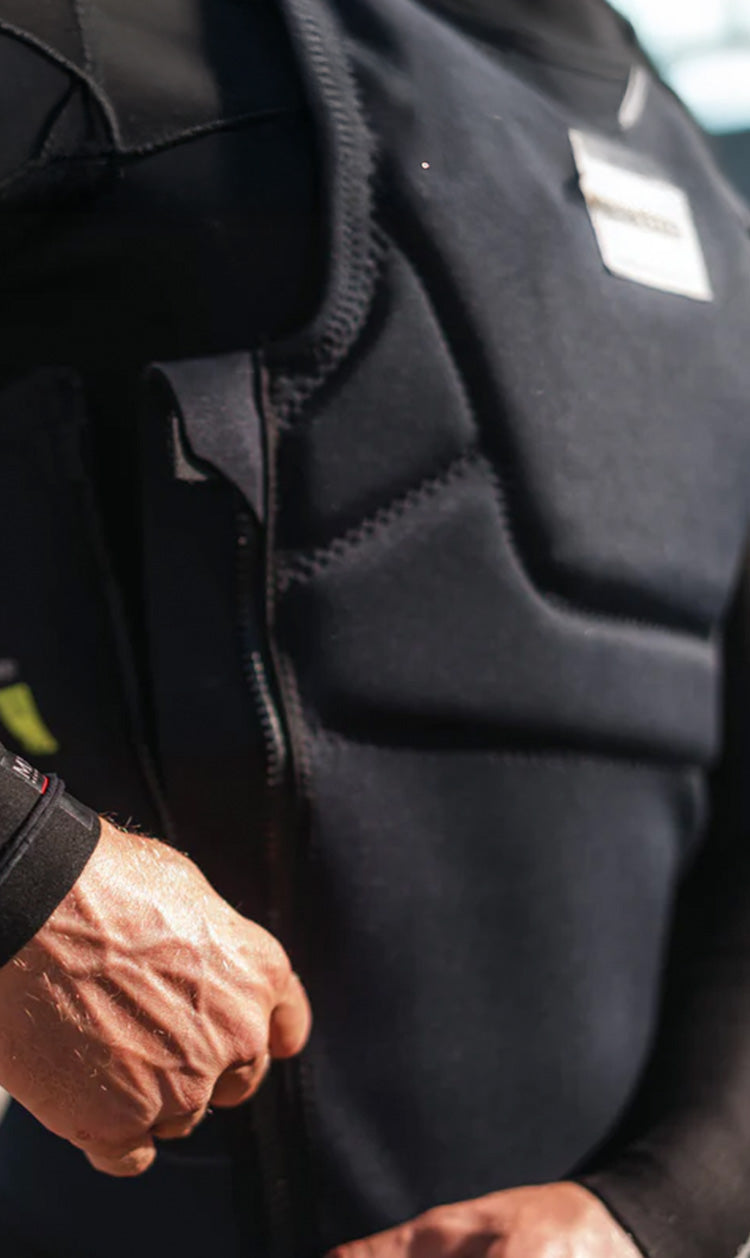
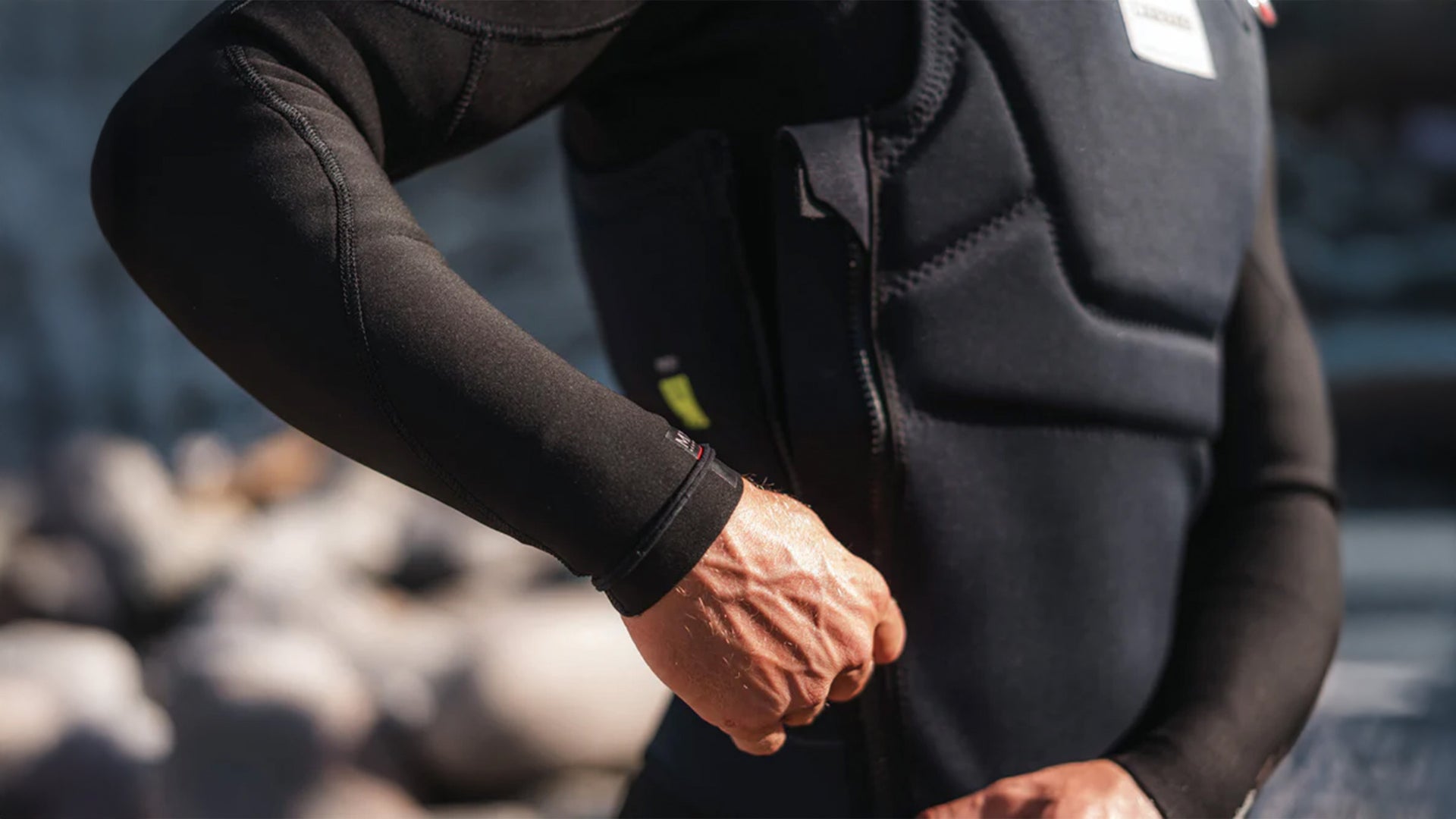
After every session, rinse your vest thoroughly in fresh water. Salt, sand, and chlorine (from cable parks) all degrade neoprene and foam over time. Don’t wring the vest - lay it flat or hang it on a wide hanger to drip dry in the shade. Direct sunlight and UV exposure break down neoprene faster than almost anything else.
Store your vest flat or hanging in a cool, dry place. Don’t fold it tightly or leave it compressed under other gear - this can permanently deform the foam panels and reduce their ability to absorb impacts.
Replace your vest every 2–3 seasons of regular use, or sooner if you notice the foam has thinned, lost its spring, or the neoprene shell is cracking. A vest that looks fine on the outside might have compromised foam inside - pay attention to how it feels compared to when it was new. If a panel feels noticeably softer or thinner, it’s time for a replacement.
Taking care of your gear is part of how we think about sustainability at Mystic. Getting the maximum usable life out of every product reduces waste and keeps gear performing the way it was designed to.
FAQ
It depends on your riding style and conditions, but we’d recommend one for most riders. If you’re learning, the confidence boost alone makes a difference - you crash more often and harder during early progression. If you’re an experienced rider pushing into powered tricks, kiteloops, or foiling, the impact risks increase with speed and height. An impact vest adds meaningful protection without restricting your riding.
Yes - but only if the vest is designed for it. Kite-specific impact vests are cut to sit cleanly under a harness without bunching or interfering with the hook and spreader bar. Standard wake vests are not shaped for harness use and will cause problems. Always choose a vest designed for your sport. Browse our kite impact vests here.
The relevant standard is EN ISO 12402-5, which covers Level 50 buoyancy aids with impact protection. A CE 50N-rated vest has been independently tested for both buoyancy and impact absorption. Not all impact vests carry CE certification - some are impact-only without a buoyancy rating. Both have valid uses, but CE certification gives you a verified baseline of protection.
Not exactly. A buoyancy aid is designed primarily to help you stay afloat, while an impact vest is designed primarily to protect against crash impacts. Some impact vests include a 50N buoyancy rating, which technically puts them in buoyancy aid territory, but the foam construction is optimised for impact absorption rather than flotation. If flotation is your main concern, a dedicated buoyancy aid or life jacket is a better choice.
A women’s impact vest should have a shorter torso length, contoured chest panels shaped for female anatomy, and adjusted side profiles. A properly fitted women’s vest sits flush against the body without gaps around the chest, doesn’t bunch at the waist under a harness, and offers the same foam density and protection level as a men’s equivalent. Never size down in a men’s range as a substitute - the proportions are fundamentally different.
With proper care - fresh water rinse after every session, shade drying, flat or hanging storage - you can expect 2–3 seasons of regular use. The foam gradually loses its ability to absorb energy over time, and neoprene degrades with UV exposure, salt, and chlorine. If the foam feels noticeably softer or thinner compared to when you bought the vest, it’s time to replace it. Don’t wait for visible damage - by that point the protective performance has already declined.
Want to find the right impact vest for your sport? Explore our full range of impact vests for kite, wake, and women’s options. If you’re building a full cold-water setup, check out our Complete Cold-Water Storm Session Setup Guide for how impact vests integrate with the rest of your gear system.
You may also like