Im Überblick: Auftriebswesten vs Aufprallwesten
Egal, ob Sie große Sprünge wagen oder auf Nummer sicher gehen wollen, diese Schutzwesten bieten einige wichtige Vorteile, auf die Sie nicht verzichten sollten.
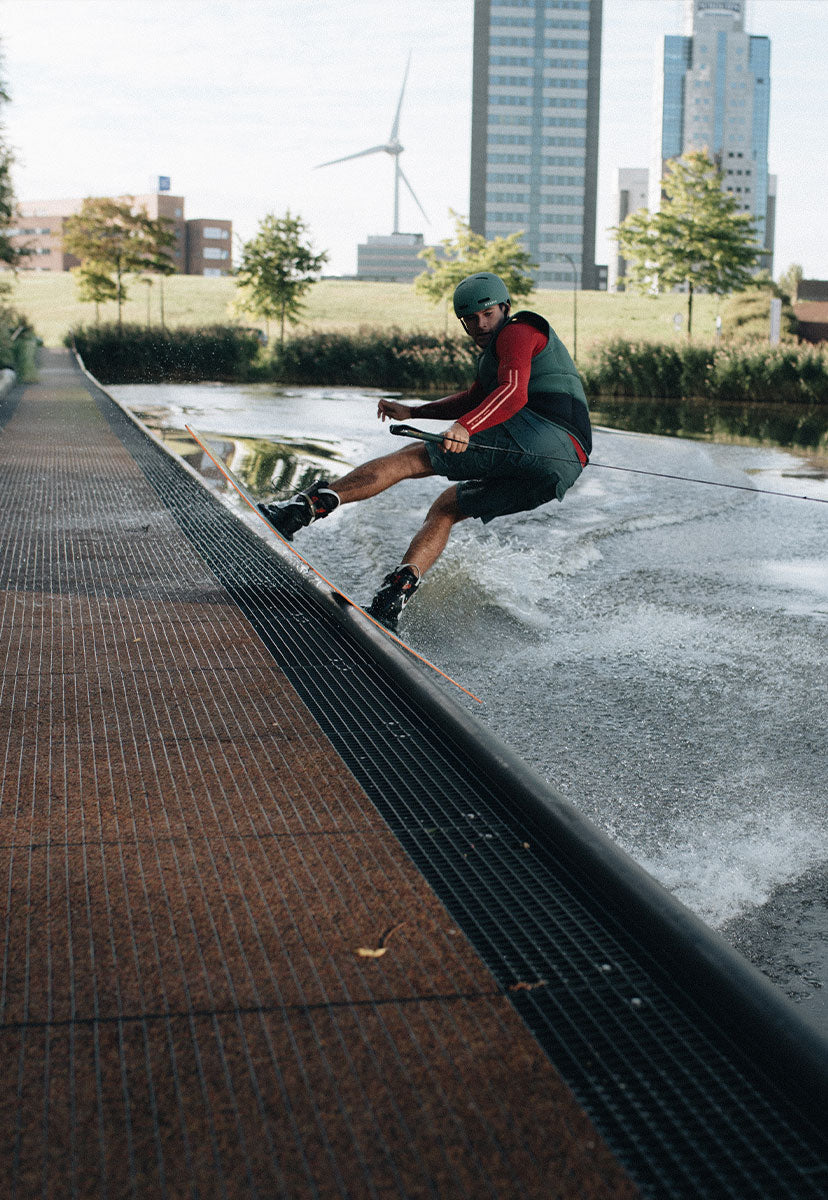
Wenn du dort draußen Wakeboarden, Kitesurfen, Windsurfen oder Foilen gehst, besteht immer ein gewisses Risiko. Die Bedingungen können unberechenbar sein, und du weißt nie, auf welche Hindernisse du stoßen könntest. Deshalb ist es entscheidend, Schutzausrüstung wie Schwimmwesten und Aufprallwesten zu tragen. Egal, ob du große Sprünge machst oder auf Nummer sicher gehst, diese Schutzwesten bieten dir wesentliche Vorteile, auf die du nicht verzichten solltest. Sie können dein Verletzungsrisiko erheblich verringern, für deine Sicherheit sorgen und sicherstellen, dass du viel Spaß auf dem Wasser hast.
Bist du dir nicht sicher über den Unterschied zwischen einer Schwimmweste und einer Aufprallweste und welche du wählen sollst? In diesem Blog werden wir die Hauptunterschiede erläutern, sowie welche Optionen wir in unserer Produktpalette haben.
CE-geprüfte Westen
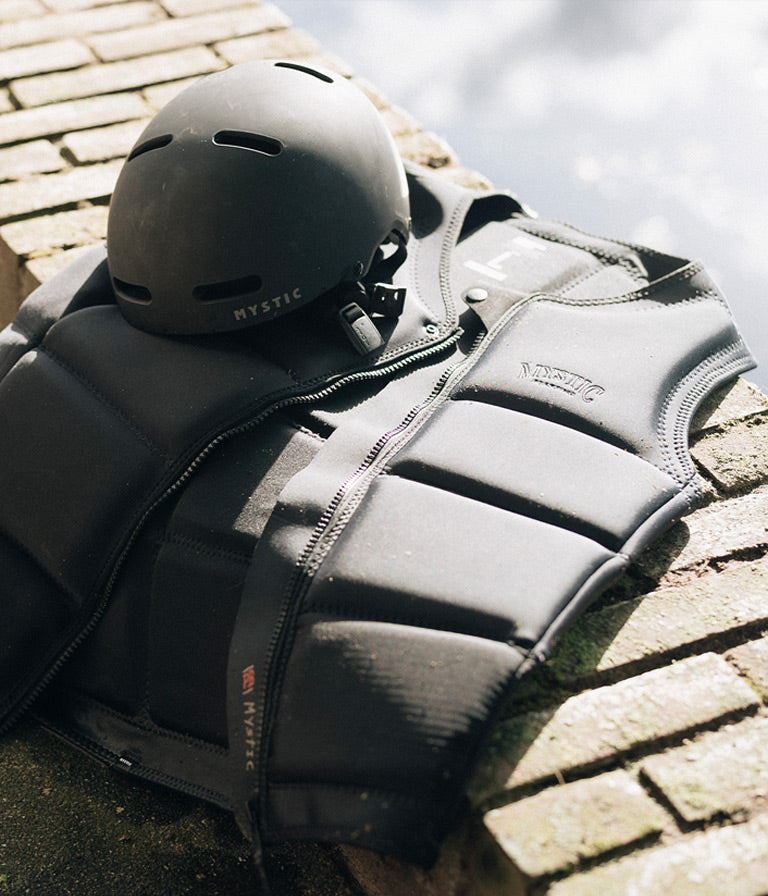
Alle Mystic-Westen, einschließlich Auftriebswesten und Schutzwesten, sind CE-zugelassen. Das bedeutet, dass sie geprüft wurden, um den europäischen Sicherheits-, Gesundheits- und Umweltschutzanforderungen zu entsprechen. Schutzwesten wurden auf Aufprall getestet, und Auftriebswesten wurden auf Auftrieb geprüft, gemessen in Newton. Unsere Auftriebswesten haben einen Auftrieb von 50 Newton, der ausreicht, um Personen zu unterstützen, die gut schwimmen können und im Notfall Hilfe in der Nähe haben. Sie bieten auch genügend Bewegungsfreiheit für Wassersportarten.
Schwimmwesten
Schwimmwesten sind darauf ausgelegt, dich durch Auftrieb über Wasser zu halten. Diese Westen werden häufig von Anfänger*innen getragen, da sie wahrscheinlich am Anfang häufiger ins Wasser fallen. Dennoch möchten Fahrer möglicherweise eine Schwimmweste tragen, wenn die Bedingungen sehr rau sind. Zum Beispiel, wenn die Strömungen stark sind, die Wellen groß sind oder du um eine Landzunge oder Felsen fährst.
Mystic bietet drei Unisex-Schwimmwesten an, von denen jede leicht unterschiedliche Eigenschaften hat. Für Kiter enthält die Brand Weste eine verstellbare Schrittschnalle, um ein Hochrutschen im Wasser zu verhindern. Die Star Weste hat einen etwas höheren Schnitt, damit du sie mit einem Hüfttrapez tragen kannst. Für Wakeboarder ist die USCG Flotation Vest etwas länger und verfügt über einen Reißverschluss an der Vorderseite, der das Umziehen erleichtert. Falls du in den USA oder Kanada fährst, ist sie auch von der US-Küstenwache und Transport Canada zugelassen.
Für Rider, die in den Wellen fahren oder Sprünge machen, können Schwimmwesten manchmal im Weg sein. In solchen Fällen sind Aufprallwesten oft besser geeignet.
Aufprallwesten
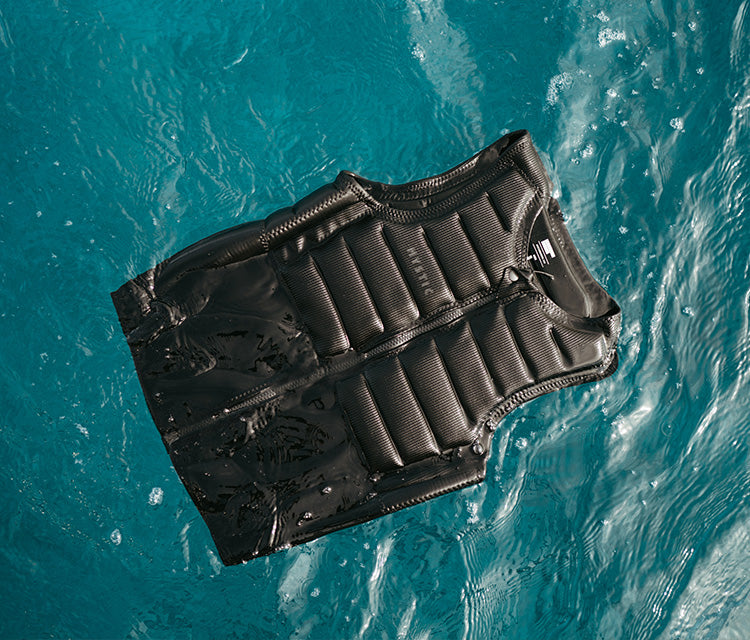
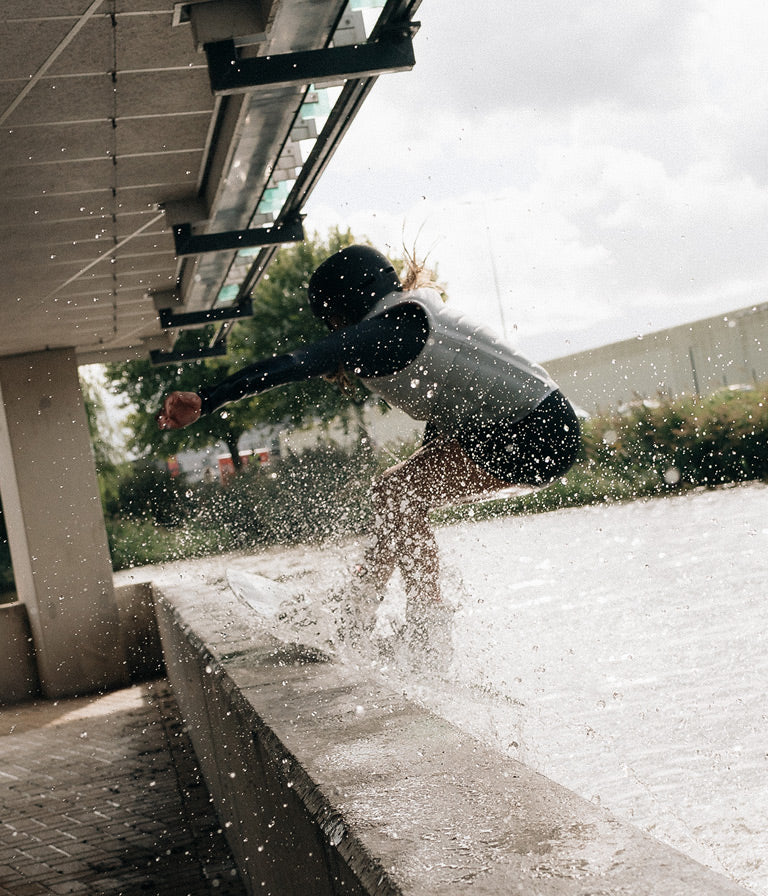
Aufprallwesten sind darauf ausgelegt, Fahrer vor harten Aufprällen im oberen Körperbereich zu schützen. Die Schaumstoffpolsterung in einer Aufprallweste absorbiert den Aufprall des Sturzes, was sowohl für Anfänger*innen als auch für Profis von Vorteil ist. Für Anfänger*innen ist sie geeignet, wenn man ständig über das Board gezogen wird. Erfahrenen Fahrer*innen ermöglicht es, sicher zu sein, vor allem wenn man neue Sprünge und Tricks lernt
Arten von Impact Westen
Wenn es um Schutzausrüstung für Wassersportarten geht, werden Schutzwesten (Impact Westen) häufiger getragen als Auftriebswesten. Aus diesem Grund gibt es mehr Vielfalt im Design von Schutzwesten. Du bevorzugst möglicherweise eine Weste, die leicht und dehnbar ist für Komfort, oder du möchtest gepolsterte Verstärkungen um deinen Rumpf herum haben. Du kannst deine Weste auch je nach deinem Budget wählen. Schutzwesten werden aus Neopren hergestellt, und die hochwertigeren Westen bestehen aus Neopren von besserer Qualität mit besseren Dehnungseigenschaften.
Unter Berücksichtigung dieser Eigenschaften haben wir eine große Auswahl an Kite- und Wake-Westen, darunter auch charakteristische Designs von Teamfahrer*innen. Der beste Weg, sich einen Überblick zu verschaffen, besteht darin, unsere Optionen durchzusehen. Einige der hochwertigeren Westen wie die Foil, Renegade und Gem für Damen enthalten NBR-Schaum zum Schutz deiner Wirbelsäule. Bei anderen Westen wie Majestic und Outlaw, oder Maze für Damen ist der Schaumstoff durchgenäht, was bedeutet, dass sich die Einsätze nicht verschieben, eine Eigenschaft, die auch bei unseren hochwertigeren Westen zutrifft.
Achte immer darauf, dass du die richtige Kollektion betrachtest, denn wir haben Westen für Wakeboarder und Kitesurfer, zwischen denen es einen Unterschied gibt. Für Wakeboarder bedeckt die Polsterung mehr den Rumpf, während Kiter darauf achten sollten, dass die Westen nicht um die Taille herum gepolstert sind, wo das Trapez sitzt. Du kannst dich jederzeit an unser Team wenden, wenn du Unterstützung bei der Auswahl des richtigen Produkts benötigst.
You may also like
A floatation vest is designed to provide buoyancy support and help you stay afloat in the water. It is tested for buoyancy and is the better choice when flotation support is your main priority. An impact vest is designed to help soften crashes, hard landings and wipeouts. It uses foam padding in key impact zones to protect the upper body, but it is not intended to replace a certified buoyancy aid or life vest. Choose a floatation vest for buoyancy support. Choose an impact vest for impact protection, freedom of movement and crash protection during riding.
A floatation vest should feel secure around the body and should be chosen using the correct size or weight guidance. It should not ride up too much when you are in the water. An impact vest should fit snugly around the chest and torso so the padding stays in place during crashes, landings and wipeouts. It should not block breathing, rotation or freedom of movement. For kitesurfing, make sure the vest fits comfortably with your harness. For wakeboarding, make sure the vest stays close to the body during grabs, rotations and hard landings.
Kite impact vests and wake impact vests are shaped differently because the sports use different equipment. A kite impact vest needs to work with a harness, so it should not have bulky padding around the waist where the harness sits. Many kite vests use a high-cut or non-padded harness waist area for comfort and better fit. A wake impact vest can cover more of the torso because wakeboarders do not wear a kite harness over the vest. Choose a kite vest for kitesurfing and a wake vest for wakeboarding, because the padding placement and fit are designed around each sport.
For wakeboarding, most riders choose an impact vest because crashes, landings and repeated falls are part of the sport. Wake impact vests usually have more padding around the torso than kite vests because they do not need to leave space for a kite harness. Men can choose the Renegade Impact Vest, Outlaw Impact Vest, Star Impact Vest, Poseidon Impact Vest, The Dom Impact Vest, Anarchy Impact Vest or Peacock Impact Vest. Women can choose the Raspa Elena Bodi Impact Vest, Juice Impact Vest, Star Impact Vest, Evoke Impact Vest, Maze Impact Vest or Dazzled Impact Vest. Choose a floatation vest instead if certified buoyancy support is your main priority.
For kitesurfing, choose based on whether buoyancy or impact protection matters more. Choose a Star Floatation Vest or Brand Floatation Vest if certified buoyancy support is your priority. Choose a kite impact vest if you want crash protection and a harness-compatible fit. Men can choose options such as the Solace Impact Vest, Block Impact Vest, Star Impact Vest or Foil Impact Vest. Women can choose options such as the Dusk Impact Vest, Ruby Impact Vest or Star Impact Vest. For kitesurfing, make sure the vest works comfortably with your harness and does not add bulky padding where the harness sits.