The Ultimate Guide to Wetsuits for Beginners
If you’re getting into any water sports like kitesurfing, wakeboarding, windsurfing, and surfing, at some point you’ll probably want to invest in your own gear, even as a beginner.
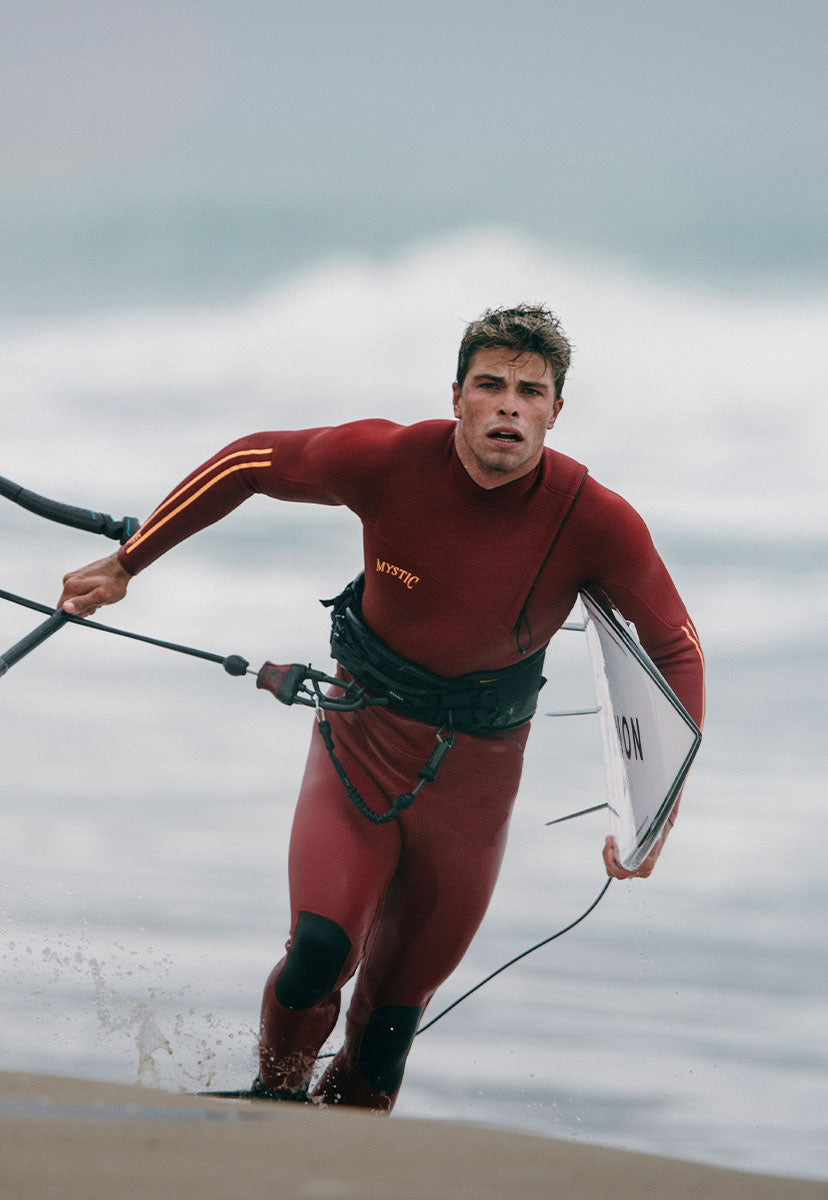
One of the most essential pieces of gear for water sports is a wetsuit. Made of a material called neoprene, the primary purpose of a wetsuit is to keep you warm out on the water and withstand the cold. This can help you extend your sessions, and ultimately lead to progression in your chosen sport.
Knowing what wetsuit to buy can be confusing for beginners in water sports. These days, there are so many different options, but who doesn’t love options? Once you wrap your head around a few key factors, you’ll come to see the beauty of wetsuits. If we sound a little obsessive, it’s because we are – wetsuits are one of our favorite pieces of gear here at Mystic, and though it may be hard to believe, we enjoy talking through the nitty-gritty details.
Shopping for a wetsuit all comes down to the conditions you’re riding in, and a few personal preferences. In this post, we cover three main topics:
- Types: Fullsuits, springsuits & shorties
- Entry: Back-zip, chest-zip, zipless
- Thickness
Hopefully by the end of it, you’ll have an idea about the wetsuit you need as a beginner.
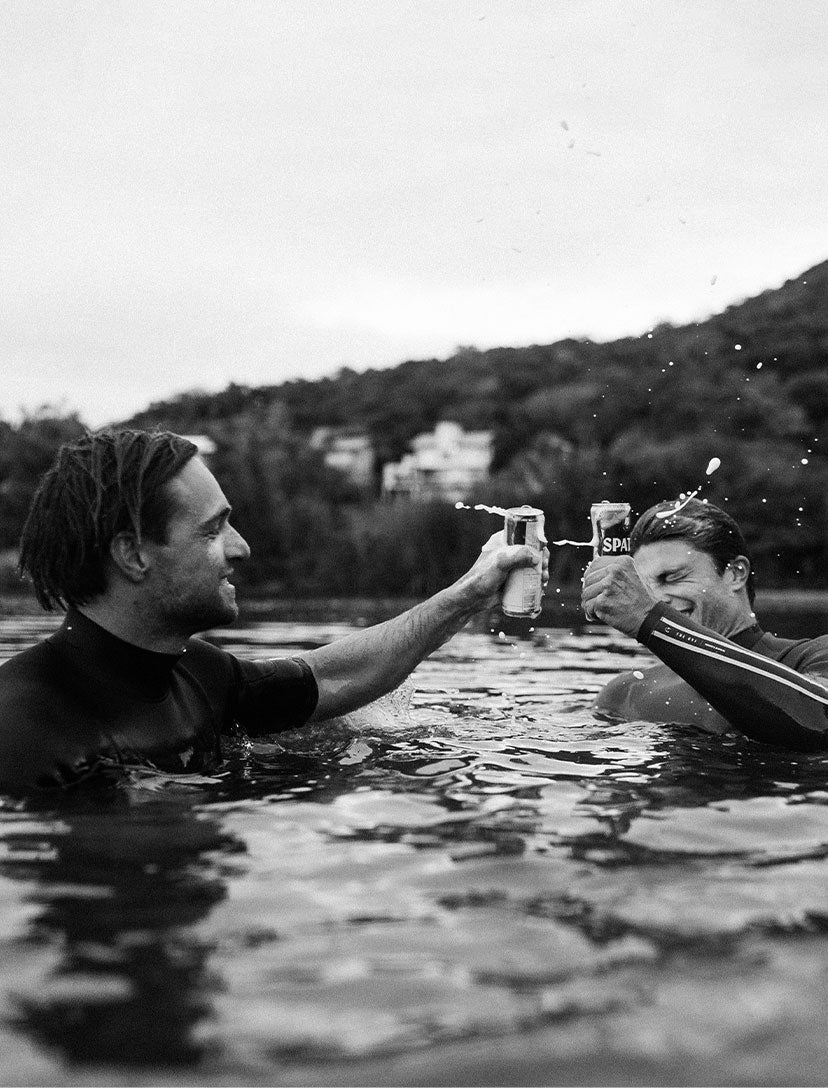
Firstly, wetsuits come in a range of different styles built for different conditions. In addition, a style can come in different thicknesses depending on how cold the water at your spot is. Riders typically have multiple wetsuits to wear throughout the year depending on the season, ranging from fullsuits in the winter to shorties in the summer.
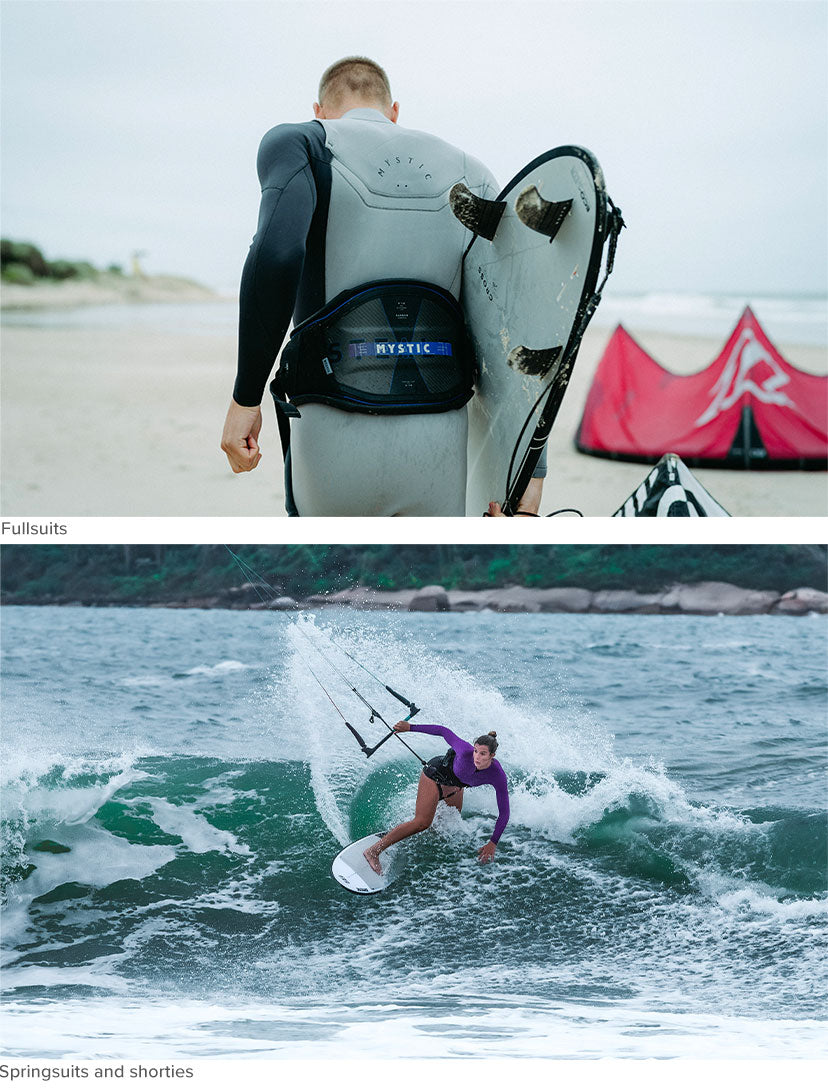
Fullsuits cover your entire body except for your hands, feet, head, and neck. They offer the most warmth and protection from the sun’s UV radiation due to their coverage. Fullsuits come in different thicknesses and are typically worn throughout the winter months. If you’re in a colder climate, you may find yourself needing fullsuits all year round.
Springsuits and shorties refer to wetsuits that are typically worn throughout the spring and summer months or in water warmer than 18 degrees Celcius, depending on where you’re based. These styles of wetsuits don’t provide full coverage, exposing the arms, legs, or a partial combination of both. Examples include longarm and shortarm shorties which expose the legs. For women, there’s also the option of a bikini cut. People typically switch to springsuits and shorties when the water gets warmer because they offer more freedom of movement and flexibility.
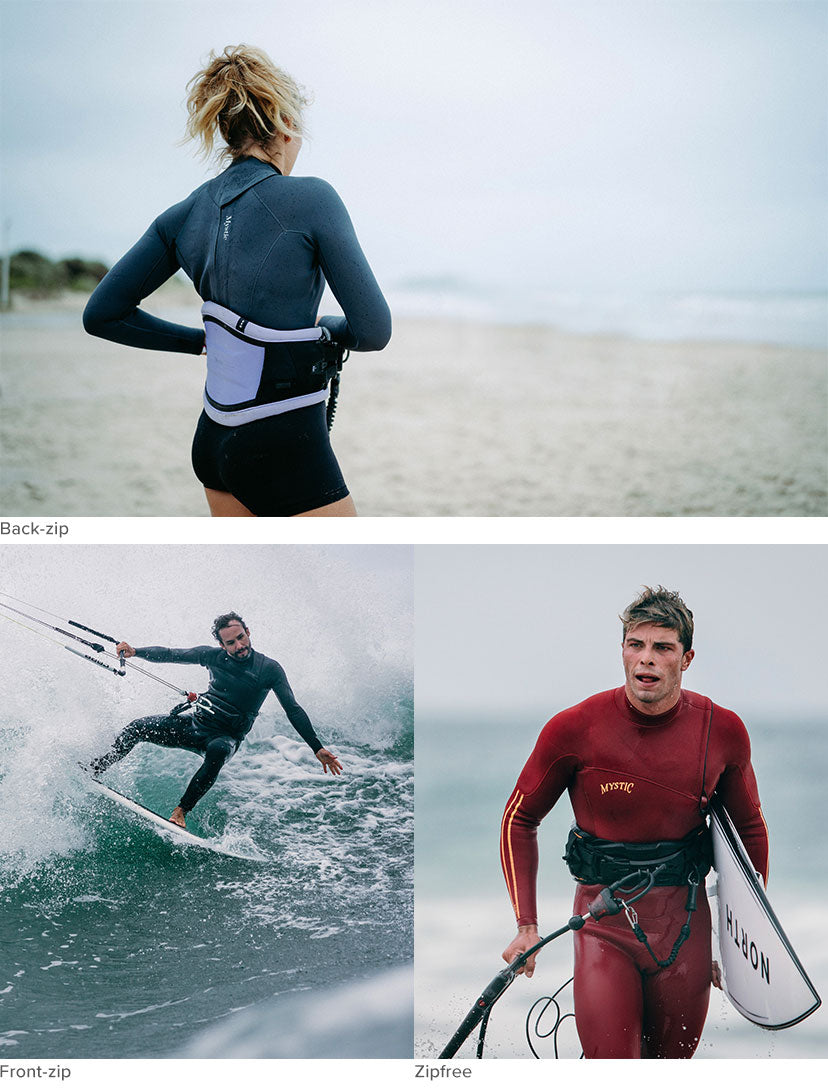
Back-zip wetsuits feature a long zip along the back of the wetsuit. They are the easiest and fastest wetsuits to get in and out of. However, the longer zipper tends to make the wetsuit less flexible and let more water into your suit.
Front-zip wetsuits are our most-sold entry wetsuits, striking a balance between flexibility, warmth, and performance. These wetsuits have shorter zippers located at the chest. They’re more of a challenge to pull your head through, but in the end, they allow less water through and offer more flexibility in the wetsuit compared to back-zip wetsuits.
Zipfree wetsuits don’t have a zipper and are entered by pulling it over your head. If you’re after performance, zipfree wetsuits may the one for you. They offer the most optimal mix of stretch, warmth, and comfort. Thickness
Wetsuits are made of neoprene, and the thicker the neoprene, the more warmth and insulation it offers the rider. Be aware that thicker neoprene also gives you less flexibility and freedom of movement in general. The thickness is measured in millimeters and is labeled in consecutive numbers divided by a slash or semicolon. This means a wetsuit can have some panels that are thicker than others.
Take for instance a 5/3mm fullsuit. This wetsuit has 5mm neoprene on the torso and back with 3mm panels at the arms and legs. Having thinner thickness for the arm panels allows for a bit more freedom of movement.
If you’re wondering what wetsuit thickness to go for, it largely depends on the water temperature you’re riding in. However, it’ll also depend on factors such as wind chill, length of sessions, and individual preferences. Here’s what we typically recommend:
- <2mm: 20+ degrees Celsius
- 3/2mm: 13-15+ degrees Celsius
- 4/3mm: 11-15 degrees Celsius; boots, gloves and hood optional
- 5/3mm: 12-8 degrees Celsius; boots, gloves and hood recommended
- >5/4mm: <8 degrees Celsius; boots, gloves and hood highly recommended
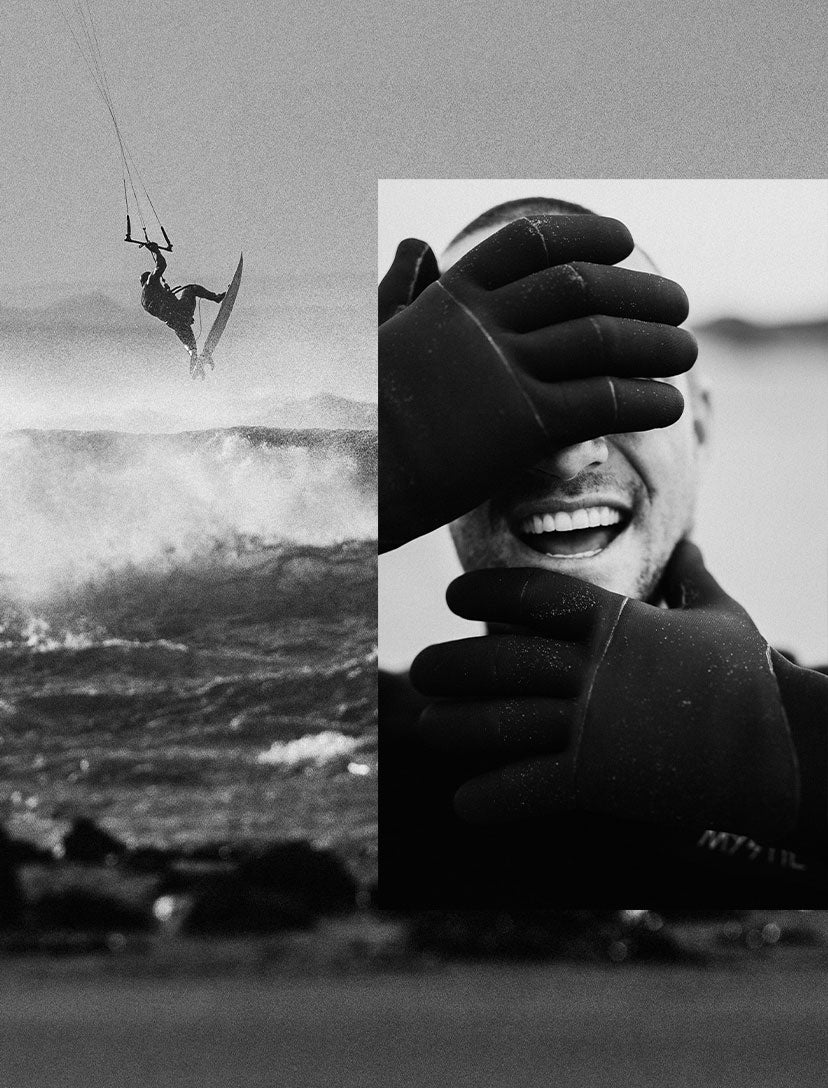
You may have noticed that when the waters start getting chilly, neoprene accessories like boots, gloves, and a hood are highly recommended! In fact, they’re essential if you want to make your sessions last, as our heads, neck, hands, and feet are sensitive to the cold.
By looking at the type of wetsuit, wetsuit entries, and thicknesses, you should have a pretty good idea of the wetsuit you need as a beginner on the water. To find your size in wetsuits, it would be a good idea to use our size guide tool, which can be found on every wetsuit product page. You can also read up on the materials used in our wetsuits. Head to our wetsuit page for more info.
Wetsuits are investments, and if you take good care of them, they should last you season after season. This includes washing, rinsing, and cleaning your wetsuit right after your sessions with cold and fresh water. In the end, a lot comes down to how you treat and take care of your wetsuits.
Ready to shop for your first wetsuit?
You may also like
Choose your first Mystic wetsuit based on the water temperature, the season and how much warmth or flexibility you need. For warm-water sessions, choose a lighter wetsuit or summer suit from Brand, Lunar or Sway. For mild conditions, choose a flexible 3/2 fullsuit from Star, Brand, Motion, Haven, Dazzled, Majestic or Jayde. For colder water, choose a thicker fullsuit from Motion, Marshall, Star, Haven, Majestic or Jayde. For the coldest sessions, choose Voltt for men or Gem for women. Choose Evolve if you want our most conscious-choice wetsuit, and choose The One if you want a zipfree wetsuit with a clean feel, bold colours and premium warmth.
A fullsuit covers the full body and gives the most warmth and protection, making it the best choice for cold water, windy conditions and longer sessions. Fullsuit options include Voltt, Gem, Majestic, Jayde, Motion, Marshall, Haven, Star, Brand, Evolve and The One. A springsuit, shorty or summer suit uses less neoprene and gives more freedom of movement in warmer water. Choose summer styles such as Brand, Lunar, Sway, Dazzled shorty styles, Motion shorty styles or The One Shorty when warmth is less important than flexibility and comfort.
Wetsuit thickness should match the water temperature, wind chill, session length and how cold you personally feel. Choose 2mm or lighter for warm water above 20°C. Choose 3/2mm for mild conditions around 13-15°C and warmer. Choose 4/3mm for cooler water around 11-15°C. Choose 5/3mm for colder water around 8-12°C. Choose 5/4mm, 5/4/3mm or 6/4/3mm for very cold water below 8°C. For warm-water flexibility, look at Brand, Lunar or Sway. For cold-water warmth, look at Voltt, Gem, Majestic, Jayde, Motion, Marshall, Haven or Star in thicker fullsuit options.
A back-zip wetsuit is the easiest and fastest to put on and take off. It is a good choice if easy entry matters most. Back-zip options can be found in series such as Majestic, Star, Brand and Lunar. A front-zip wetsuit gives a better balance of warmth, flexibility and performance because the zipper is shorter and placed at the chest. Front-zip options include series such as Voltt, Motion, Marshall, Evolve, Brand, Sway, Gem and Jayde. A zipfree wetsuit removes the zipper for the cleanest feel, strong stretch and high comfort. Choose The One if you want a zipfree Mystic wetsuit with premium warmth and a minimal entry feel.
In colder conditions, wetsuit accessories can be just as important as the wetsuit itself. A wetsuit keeps your core warm, but your hands, feet, head and neck are sensitive to cold water and wind. Choose Mystic boots when you need warmer feet, grip and protection. Choose Mystic gloves when your hands get cold or the wind chill is strong. Choose a Mystic hood or hooded wetsuit when head and neck warmth become important. For winter sessions, a thick wetsuit without boots, gloves and a hood may still feel too cold.


